Opera’s WebAI runs AI inside the browser, no cloud required
The WebAI preview is out in Opera One, GX and Neon. Sites and extensions can tap a model installed on your computer, so page content never has to leave your machine.
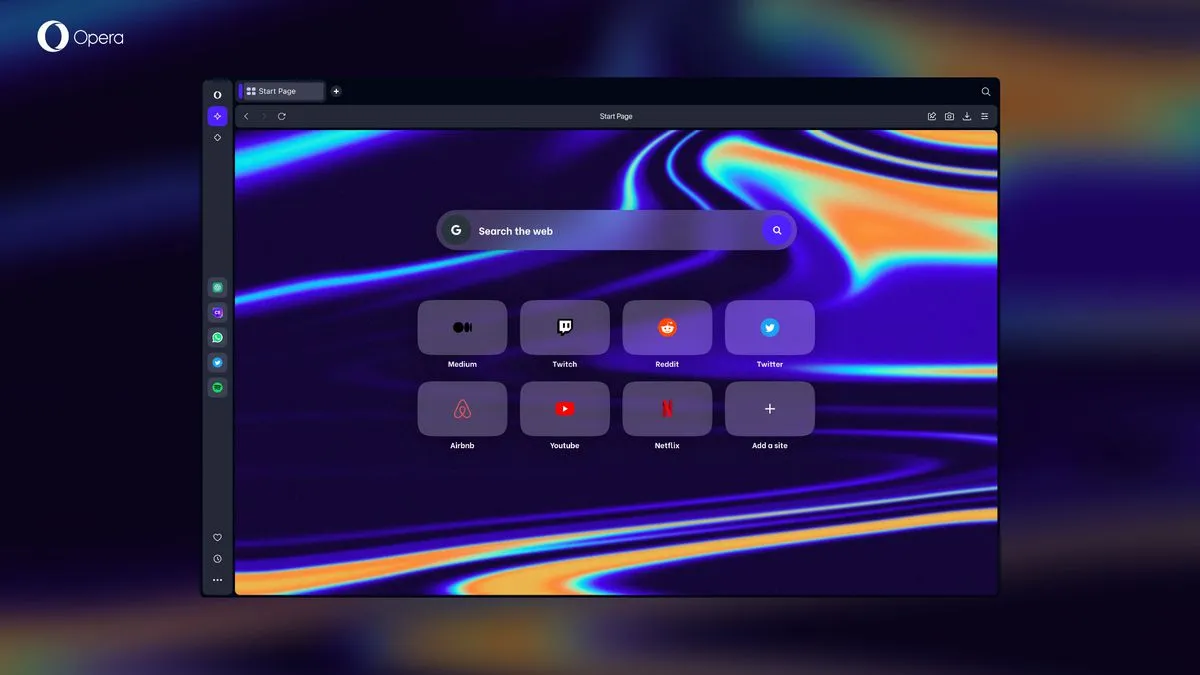
Every time an extension offers to "summarize this page with AI," the text usually takes a trip to somebody’s server. Opera wants to change that. On October 22 it released a preview of WebAI, which lets websites and extensions use AI models running on the user’s own computer. No separate app, no local server, no API key.
WebAI is a proposed web standard backed by companies including Google and Microsoft. Opera’s implementation runs open-weight models on its own inference engine and can also use compatible models already on your machine.
What developers get
There are three APIs: Prompt for generating text, Decision for classifying information, and Semantic Embeddings for linking related content. For extension builders the appeal is twofold: user data stays on the device, and there’s no per-request cloud bill.
To show what’s possible, Opera put out six experimental extensions. One highlights the paragraphs of an article that matter for your project, another quizzes you on what you just read, and one has two ASCII cats improvising a scene. They’re demos, not browser features.
How to turn it on
- Update Opera One (or use GX or Neon).
- Go to
opera://settings/aiand switch on Web AI API. The browser downloads a local model at this point, which can take a few minutes. - Install one of the sample extensions and open it from the extensions menu.
Nothing downloads until you opt in, and you can turn it off at any time.
Who’s left out
Support is narrow: 64-bit Windows with an Intel or AMD chip, and Apple silicon Macs. Intel Macs, Linux and Windows on Arm are out. Speed depends on your hardware, and Opera says performance is still improving.
I like the idea more than the current execution. Local AI fixes two real problems, privacy and cost, and an open standard with Google and Microsoft behind it has a shot at going mainstream. But as long as it means downloading a model, owning a recent machine and using a browser with a small market share, it’s a lab experiment. The signal to watch for is Chrome shipping the same standard.